Should You Pack a Portable Carbon Monoxide Alarm?
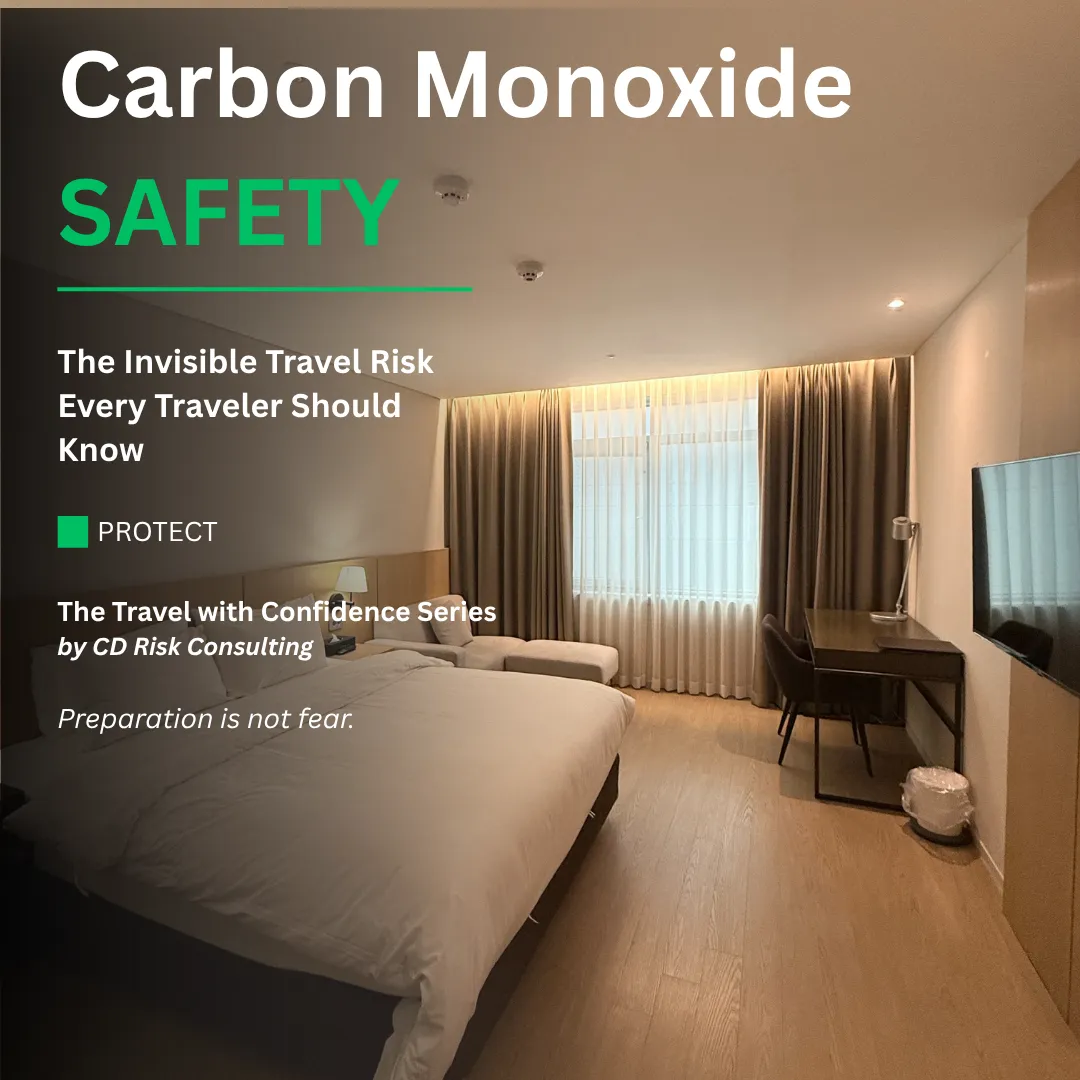
Carbon Monoxide Safety: The Invisible Travel Risk Every Traveler Should Know
Some travel risks are easy to see.
A broken door lock. A poorly lit parking lot. A crowded transportation hub. A questionable neighborhood.
Other risks are harder to recognize.
Carbon monoxide is one of them.
Carbon monoxide, often called CO, is a colorless, odorless gas produced when fuels such as gasoline, natural gas, propane, or wood burn. When CO builds up inside an enclosed space, people can become seriously ill without realizing what is happening.
For travelers, that creates a unique challenge.
When you stay in a hotel, resort, vacation rental, or cabin, you usually know very little about the property's heating equipment, generators, fuel-burning appliances, ventilation, or maintenance history.
This isn't something you need to obsess over every time you travel.
But it is something you should understand.
Preparation is not fear. It's how you travel with confidence.
A Tragic Reminder for Travelers
In March 2025, 14-year-old Miller Gardner, the son of former New York Yankees player Brett Gardner, died while his family was vacationing in Costa Rica.
Costa Rican authorities later determined that carbon monoxide poisoning was the cause of his death. Investigators examined a machine room adjacent to the family's hotel room as they worked to determine the source of the exposure.
The tragedy brought renewed attention to a travel risk many people rarely consider.
When we enter a hotel or resort, there is a natural tendency to assume that because the property looks comfortable, professional, or luxurious, everything behind the scenes is functioning safely.
But appearances can't tell us everything.
That's why awareness matters.
Why Carbon Monoxide Can Be So Dangerous
One of the greatest dangers of carbon monoxide is that your senses cannot detect it.
You can't see it.
You can't smell it.
You can't taste it.
Common symptoms of carbon monoxide poisoning can include:
Headache
Dizziness
Weakness
Nausea or vomiting
Chest pain
Confusion
Severe exposure can lead to loss of consciousness and death.
For travelers, there's another challenge:
Those symptoms can easily be blamed on something else.
A headache might seem like dehydration.
Nausea might seem like something you ate.
Fatigue might seem like jet lag.
Dizziness might be blamed on heat, alcohol, or a long travel day.
That can delay recognizing that something more serious may be happening.
Mike's Travel Tip
If multiple people staying in the same room or property suddenly develop similar unexplained symptoms, don't automatically assume it's food, dehydration, or travel fatigue.
Get outside into fresh air and seek medical attention.
Sometimes the pattern tells you something is wrong before you know exactly what is causing it.
Where Can Carbon Monoxide Come From?
Carbon monoxide can be produced by fuel-burning equipment and appliances, particularly when they malfunction, are improperly installed, or are used without adequate ventilation.
Potential sources can include:
Furnaces and heating systems
Gas appliances
Fireplaces and wood-burning stoves
Propane heaters
Portable generators
Vehicles or engines operating near enclosed spaces
Other fuel-burning equipment
That doesn't mean a property containing one of these items is automatically unsafe.
It means you should understand that the risk exists.
Don't Assume Your Accommodation Has a CO Alarm
Here's an important distinction:
A smoke alarm and a carbon monoxide alarm are not the same thing.
Seeing a smoke detector in your room does not necessarily mean carbon monoxide is being monitored.
Requirements for CO alarms can vary depending on where you're traveling, the type of accommodation, and local regulations. This can be particularly important when traveling internationally or staying in vacation rentals, cabins, older properties, and other unfamiliar accommodations.
The lesson isn't to distrust the property.
It's simply:
Don't assume. Verify when you can.
A portable carbon monoxide alarm can provide another layer of awareness while traveling.
Compact, battery-powered models are available and may be worth considering depending on your destination and accommodations.
I look at devices like this the same way I look at other personal safety equipment:
They're tools for the toolbelt.
A portable CO alarm isn't your entire safety plan. Neither is a door alarm, portable charger, tracking device, or any other piece of equipment you travel with.
Each tool serves a purpose.
The value comes from understanding when and how to use it.
A portable CO alarm may deserve additional consideration when staying in:
Vacation rentals
Cabins
Remote properties
Older accommodations
Properties using fuel-burning appliances
Areas where generators may be used
International accommodations where you're uncertain about existing CO detection
If you decide to travel with one, learn how to use it before your trip and follow the manufacturer's instructions for placement and operation.
And once you arrive:
Don't leave it packed in your suitcase.
Before You Settle Into Your Room
You don't need to inspect your accommodation like a technician.
That's not your job.
Instead, add carbon monoxide awareness to the basic room-safety routine you already use.
Take a few minutes to understand your surroundings.
Look for:
Smoke alarms
Carbon monoxide alarms
Fuel-burning appliances
Fireplaces or heaters
Attached or nearby garages
Generators operating near the property
Mechanical equipment near your room
If you're staying in a rental and aren't sure whether CO alarms are installed, ask the host or property manager.
And remember:
Never rely on smell to determine whether carbon monoxide is present. Carbon monoxide itself has no smell.
This fits naturally into the routine I discuss in Before You Unpack: A Hotel Room Safety Routine Every Traveler Should Know.
Before you settle in:
Secure. Locate. Connect. Observe.
Know your exits. Secure your room. Know how to contact help. Pay attention to the environment around you.
What Should You Do If You Suspect Carbon Monoxide?
This is where awareness turns into action.
If a carbon monoxide alarm sounds, or if you and others suddenly experience symptoms that could indicate CO exposure:
Get outside into fresh air.
Then contact local emergency services and seek medical attention.
Do not remain inside trying to identify the source yourself.
Do not simply open a window and go back to sleep.
Do not ignore an alarm because you don't see or smell anything unusual.
Your priority is getting yourself and others away from the potential exposure.
Add CO Awareness to Your Travel Safety Plan
Carbon monoxide safety doesn't need to become another complicated travel procedure.
It becomes another layer in the plan you're already building.
SECURE — Check your room and locks.
LOCATE — Know your emergency exits.
CONNECT — Know how to reach the front desk and emergency services.
OBSERVE — Pay attention to alarms, appliances, generators, and the environment around your room.
RESPOND — If something seems wrong, take action.
This is where the Travel with Confidence Guides begin working together.
Know Your Destination helps you understand where you're going and what you may encounter.
Packing With Purpose helps you prepare for more than the itinerary.
Before You Unpack gives you a routine for checking and orienting yourself to your accommodation.
Why Travel Insurance Belongs in Every Travel Safety Plan helps you understand what resources and coverage may be available if a medical emergency occurs away from home.
No single step addresses every risk.
The layers create the plan.
Safety Devices Are Tools for the Toolbelt
This is an important concept whenever we talk about travel safety equipment.
Safety devices are tools for the toolbelt.
A portable carbon monoxide alarm can provide an additional layer of awareness.
A hotel door alarm can provide another.
A portable charger solves a different problem.
Location-sharing technology serves another purpose.
But none of them replaces situational awareness, preparation, or good judgment.
The mistake is buying a safety device and believing the device itself makes you safe.
It doesn't.
The tool supports the plan. It doesn't replace the plan.
If an alarm sounds, respond.
If several people suddenly become ill, pay attention.
If something about an accommodation concerns you, ask questions.
If you believe the environment may be unsafe, remove yourself from it.
No single device eliminates every risk.
That's why we build layers.
Preparation Protects the Experience
Travel should be exciting.
It should give you opportunities to explore new places, experience different cultures, spend time with people you care about, and create memories.
Learning about carbon monoxide shouldn't make you afraid of hotels, resorts, cabins, or vacation rentals.
It should make you a more informed traveler.
Because some risks are obvious.
Others aren't.
And understanding the difference can change how effectively you respond when something doesn't seem right.
Carbon monoxide may be invisible.
Your preparation shouldn't be.
Ready to Travel With More Confidence?
Before your next hotel stay, resort visit, cabin weekend, or vacation rental, spend a few minutes building your travel safety plan.
Start with my FREE Pre-Travel Checklist to organize your travel documents, emergency contacts, destination research, and other important preparation before you leave home.
Then continue building your plan with these Travel with Confidence Guides:
Know Your Destination — Understand where you're going before you arrive.
Packing With Purpose — Prepare for more than the itinerary.
Before You Unpack — Build a five-minute hotel room safety routine.
Why Travel Insurance Belongs in Every Travel Safety Plan — Understand your coverage before you need it.
You don't need a tool for every possible situation.
You don't need to anticipate everything that could go wrong.
You need awareness, preparation, and the right tools for your toolbelt.
Preparation is not fear.
It's how you travel with confidence

