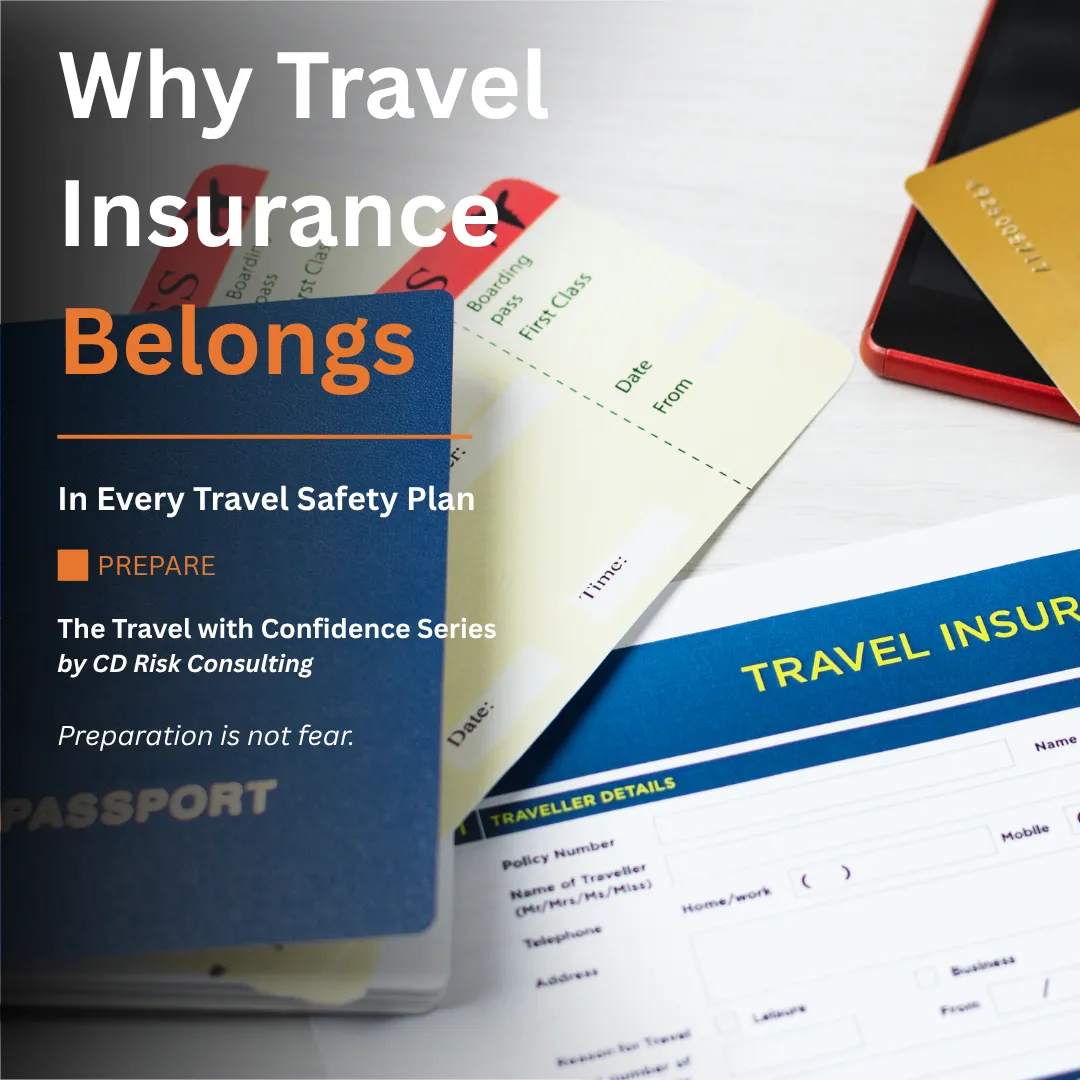
Why Travel Insurance Belongs in Your Travel Safety Plan
One of the most exciting parts of planning a trip is imagining everything that could go right.
You research your destination, compare hotels, book flights, and start building a list of restaurants, attractions, and experiences you don't want to miss.
Then, somewhere near the end of the booking process, a question appears:
Would you like to purchase travel insurance?
Many travelers hesitate.
Some click "No" because they're trying to save money. Others assume their health insurance, Medicare, or credit card will provide enough protection if something goes wrong.
But travel insurance isn't only about protecting the money you've spent on your trip.
It's also about protecting you and your options.
If you become sick, suffer an injury, lose your luggage, experience a major delay, or need to return home unexpectedly, the right coverage can provide financial protection, emergency assistance, and access to resources when you need them most.
That's why I consider insurance an important layer of a complete travel safety plan.
Preparation is not fear.
It's how you travel with confidence.
Travel Doesn't Have to Go Wrong to Become Complicated
Most trips go exactly as planned.
But even a relatively small problem can quickly become stressful when you're far from home.
A delayed flight could cause you to miss a cruise departure.
A lost suitcase might leave you without medication or essential clothing.
An illness or injury could require medical treatment in a country where your regular health insurance provides limited—or no—coverage.
The challenge isn't always the emergency itself.
It's trying to solve the problem while navigating unfamiliar surroundings, a different healthcare system, language barriers, and unexpected expenses.
Travel insurance won't prevent these situations from happening.
What it can do is give you more options when they do.
Travel Insurance Is More Than Trip Cancellation
One of the biggest misconceptions about travel insurance is that it's primarily for canceling a trip.
There are several types of protection travelers should understand.
Trip Cancellation or Interruption
This may help reimburse certain prepaid travel expenses when a covered event forces you to cancel your trip or return home early. Depending on the policy, benefits may also include travel delays or delayed, lost, or stolen baggage.
Travel Medical Insurance
Travel medical coverage can help with eligible medical expenses if you become sick or injured while traveling.
This can become especially important during international travel because your regular U.S. health insurance may not provide the same coverage abroad.
Medical Evacuation Coverage
Medical evacuation coverage addresses a different problem.
If the care you need isn't available where you are, you may require transportation to another hospital, another city, another country, or potentially back to the United States.
These protections may be packaged together or offered separately depending on the policy.
So don't simply ask:
"Do I have travel insurance?"
Ask:
"What does my policy actually cover?"
Don't Assume Your Health Insurance Travels With You
One of the most common mistakes travelers make is assuming their regular health insurance works the same way outside the United States.
It may not.
Coverage varies by provider and plan. Even when international medical care is covered, you may be required to pay the provider directly and request reimbursement later.
That means there are really two questions you need answered:
Am I covered?
And:
How does payment work if I need care?
Before traveling internationally, contact your health insurance provider and ask:
Am I covered outside the United States?
Is emergency or urgent medical care covered?
Will I have to pay the provider upfront?
How would I submit a claim?
Are there limitations based on my destination?
What happens if I'm hospitalized?
Never assume.
Verify.
Knowing the answers before you travel can prevent unnecessary confusion during an emergency.
Mike's Travel Tip
One of the questions I encourage travelers to answer before leaving the country is:
"If I needed emergency medical care tomorrow, who would pay the bill?"
Then ask a second question:
"How would that payment actually work?"
Having insurance doesn't necessarily mean you'll simply hand a hospital your insurance card and walk away.
You may have to make a payment or deposit and seek reimbursement later.
Find out before you leave home—not while you're sitting in a hospital trying to figure it out.
A Special Consideration for Medicare Travelers
If you have Medicare, international travel deserves additional planning.
Original Medicare generally provides very limited coverage outside the United States, although there are specific exceptions.
Medicare Advantage plans may offer additional benefits for emergency or urgently needed services while traveling internationally, depending on the plan. Some Medigap policies may also provide foreign-travel emergency benefits.
The important lesson is simple:
Don't assume Medicare automatically follows you overseas.
Before traveling internationally, contact your plan and determine:
What medical care is covered?
What emergency benefits are available?
Will I have to pay expenses upfront?
How would reimbursement work?
Should I consider additional travel medical coverage?
Know what you have before deciding what else you may need.
Don't Overlook Medical Evacuation Coverage
Medical evacuation is one of the most valuable—and least understood—parts of travel insurance.
If you're seriously ill or injured, the closest medical facility may not be equipped to provide the care you need.
You could require transportation to a larger hospital, another city, another country, or eventually back home.
Medical evacuation can be extremely expensive, particularly when specialized transportation and medical personnel are required.
It deserves even more consideration if your trip includes:
Remote destinations
Islands
Cruises
Adventure travel
Areas with limited medical infrastructure
You don't need to assume something will happen.
You simply need to understand what your options would be if it did.
Read the Fine Print Before You Buy
Travel insurance policies are not all the same.
That's why comparing only the price can be a mistake.
Ask two questions:
What does this policy cover?
And just as importantly:
What doesn't it cover?
Depending on the policy, limitations or exclusions may apply to:
Pre-existing medical conditions
Certain adventure or high-risk activities
Civil or political unrest
Pandemics
Certain destinations
Weather events or natural disasters
Timing may matter too. Some benefits or waivers may only be available if coverage is purchased within a certain period.
If something isn't clear, ask before purchasing.
A policy is only useful if you understand the protection you're actually buying.
What About Credit Card Travel Benefits?
Some credit cards include travel-related benefits.
Depending on the card, these might include trip cancellation or interruption, rental car protection, or lost and delayed baggage benefits.
That's useful.
But don't automatically assume your credit card provides all the protection your trip requires.
Review the actual benefits and determine whether you have adequate coverage for:
Medical emergencies
Medical evacuation
Trip cancellation or interruption
Your specific destination
The cost and circumstances of your trip
You may discover that you already have useful coverage.
Or you may identify gaps.
Either way, you're making an informed decision instead of an assumption.
Buying Insurance Is Only Half the Job
You also need to know how to use it.
Before leaving home, keep accessible digital—and when practical, printed—copies of:
Your policy number
Insurance provider information
24/7 emergency assistance number
Medical and evacuation information
Claim instructions
Share this information with a trusted family member or friend.
If you're dealing with an emergency, your loved ones shouldn't have to search through your email trying to determine whether you have coverage or whom they should call.
Build your insurance information into your travel safety plan before you leave.
Travel Insurance Supports—Not Replaces—Your Safety Plan
Travel insurance is an important layer of protection, but it isn't a substitute for preparation.
It won't replace situational awareness.
It won't prevent poor decisions.
And it won't eliminate every travel risk.
What it can do is provide resources and financial protection that may help you respond more effectively when circumstances change.
A strong travel safety plan combines destination research, smart preparation, situational awareness, good decision-making, emergency planning, and appropriate insurance coverage.
Each layer supports the others.
The goal isn't to eliminate every possible problem.
It's to give yourself options.
Before Your Next Trip
Before you finalize your plans, ask yourself:
What travel and medical coverage do I already have?
Does that coverage work at my destination?
What would happen if I became sick or injured?
Would I have to pay medical expenses upfront?
Do I have appropriate medical evacuation coverage?
What isn't covered by my policy?
Do I know who to call for assistance?
Does someone at home have my insurance information?
These questions may not be as exciting as choosing a hotel or planning an itinerary.
But they're just as important.
Because preparation doesn't diminish the adventure.
It helps protect it.
Ready to Travel With Confidence?
Travel insurance isn't about expecting something to go wrong.
It's about understanding your options if something does.
Before your next trip, download my FREE Pre-Travel Checklist to help organize your travel documents, emergency contacts, destination research, and the other details that support a complete travel safety plan.
And as you continue preparing, review Packing With Purpose to make sure important medications, documents, and essential information remain accessible throughout your trip.
A few minutes of preparation today can make a significant difference when circumstances change tomorrow.
Preparation is not fear.
It's how you travel with confidence.

